MBy the Maison Menashe team··6 min readMaterials & Craft
Quick answer: The first thing most men wonder about antler rings is whether the antler came from a killed animal. It didn't. Deer and elk drop their antlers naturally every year as part of a normal growth cycle, and the material used in an antler ring is gathered from the ground afterward, not taken from a living or hunted animal.
Once that's settled, the real question is how a piece of shed antler ends up smooth, sealed, and set into a band you can wear every day without it cracking. It comes down to three steps: sourcing, stabilizing, and inlaying into a metal core built to take the daily wear the antler alone couldn't survive.
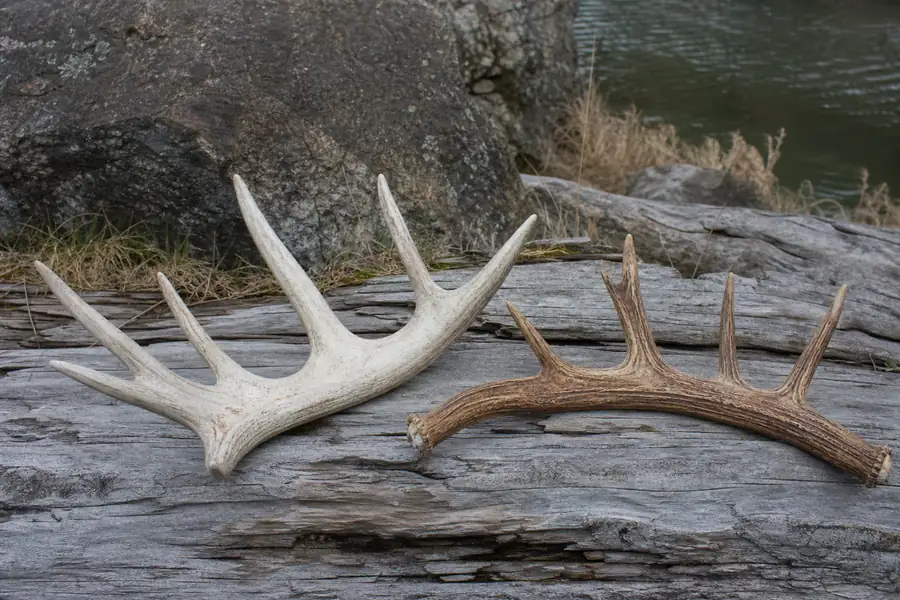
Antler used in wedding bands is naturally shed material, collected after the animal drops it each year.
The antler is stabilized with resin under pressure so it won't crack, chip, or absorb moisture.
It's set into a channel cut into a tungsten carbide core, not carved as a solid piece on its own.
Color and grain vary section to section, so no two antler rings look exactly alike.
The metal core carries the ring's size and strength, and it can't be resized once the antler is set.
What Is an Antler Ring Made From?
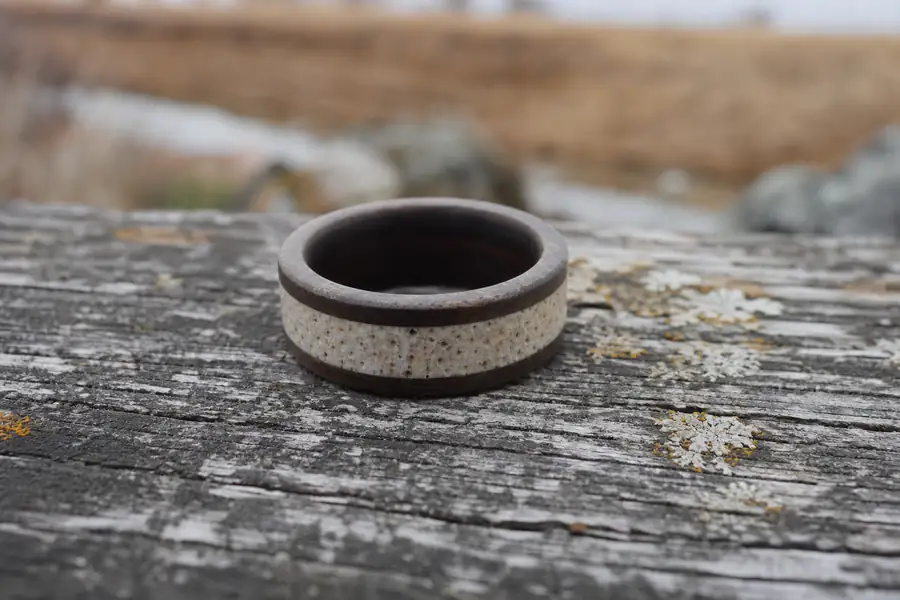
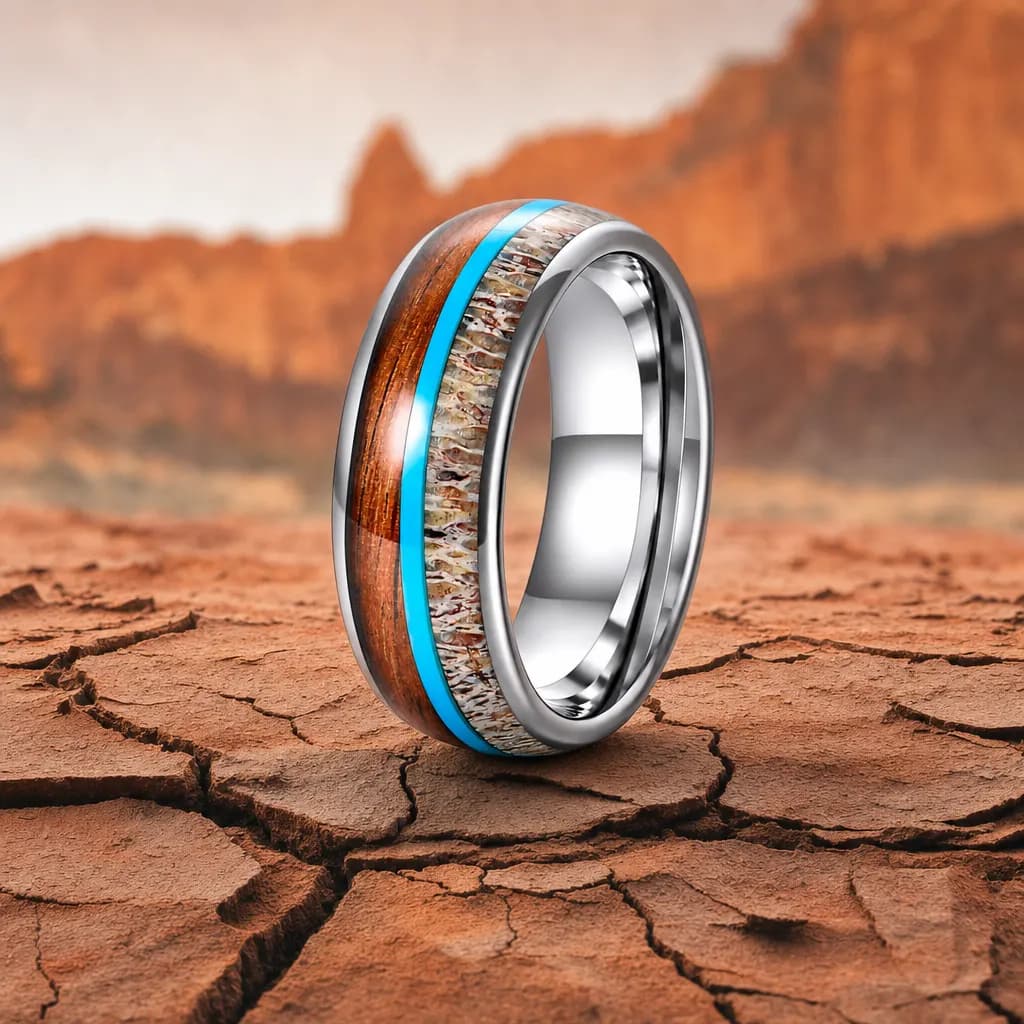
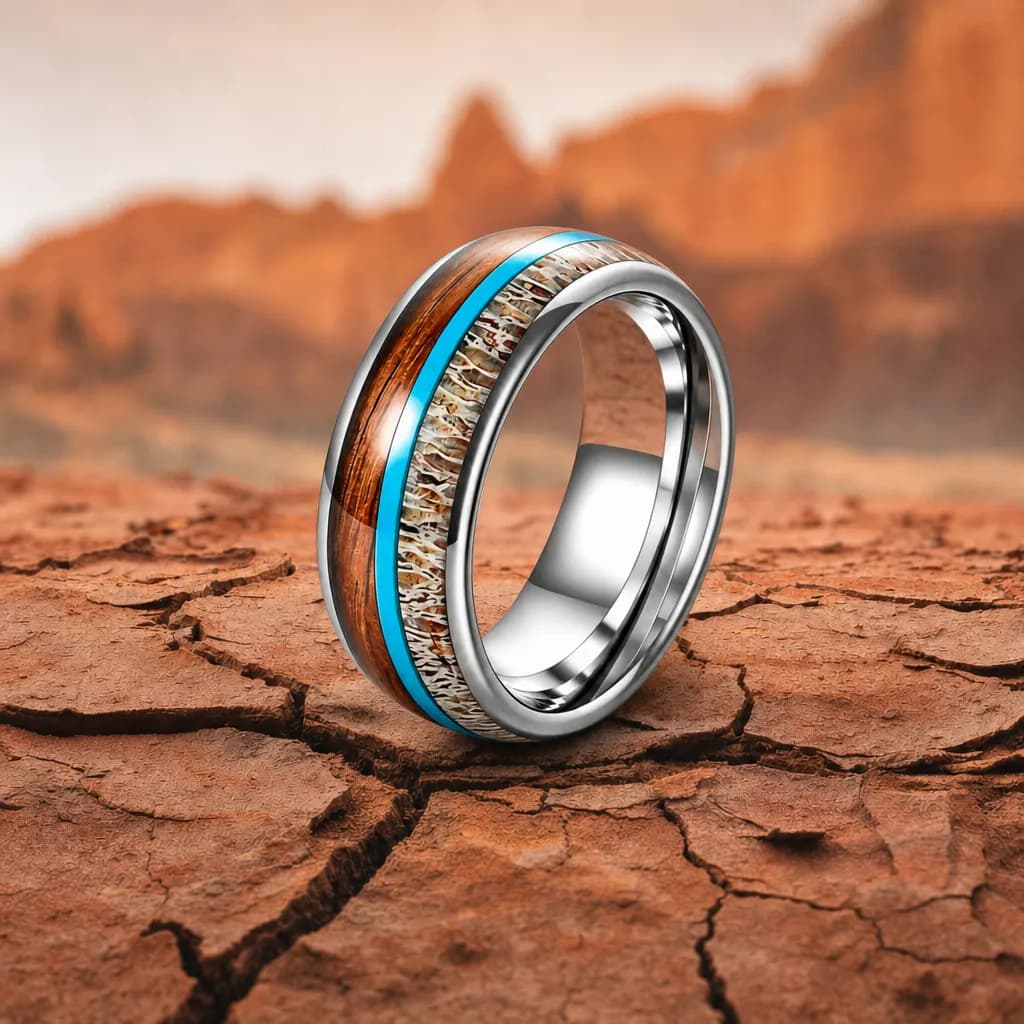
An antler ring pairs a metal core, usually tungsten carbide, with a section of naturally shed deer or elk antler set into the surface as an inlay. The antler is never removed from an animal by force. Deer shed and regrow a full set of antlers annually, and collectors gather them from forest floors and antler farms during shed season, the same way people gather feathers or driftwood.
This antler ring sits in the Natures Elegance collection, alongside other bands built from organic materials instead of plain polished metal, and it shares the case with more graphic designs like The Arrow, which gets its texture from faceted tungsten rather than an inlay.
Shed antler differs from horn or ivory, two materials people sometimes confuse it with. Horn is permanent and grows over a bone core for the animal's life, and ivory is modified tooth material. Antler is bone that drops off entirely and regrows from scratch each year, which is why it can be gathered indefinitely without touching a live herd.
How Deer Antler Is Stabilized for a Ring
Raw antler can't go straight into a ring because it's naturally porous, full of small channels that once carried blood and nutrients to the growing antler. Stabilizing means saturating the antler under vacuum pressure with a clear resin that fills those channels, so the material comes out dense, moisture-resistant, and hard enough to hold a polish.
Skip this step and antler absorbs sweat and soap over years of wear, discolors unevenly, and eventually cracks along its natural grain lines. The stabilizing process takes days rather than hours: the antler section sits in resin under pressure until the resin fully replaces the air in every pore, and it's checked for hardness before it moves on to shaping.
How the Antler Is Set Into the Band
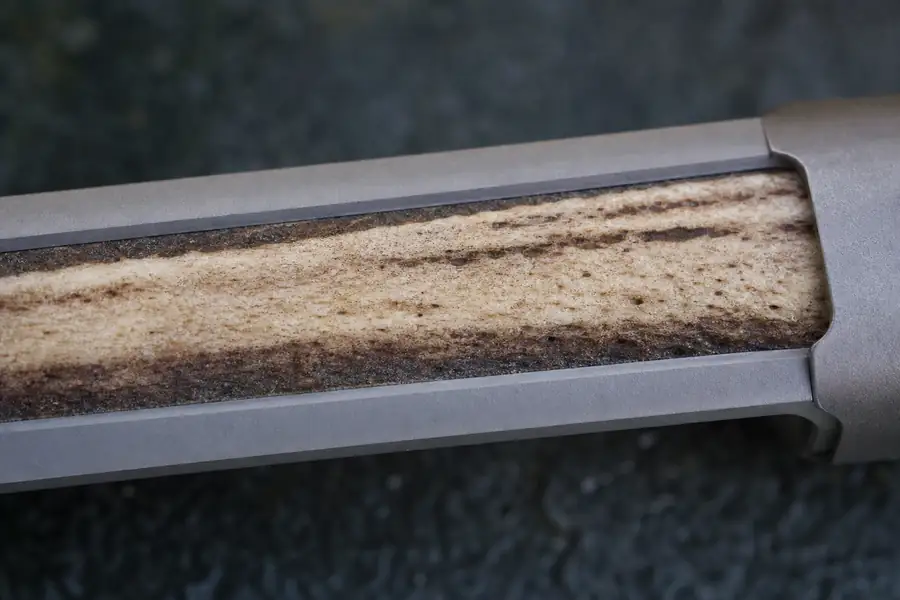
The antler is set into a channel machined directly into a tungsten carbide core, not glued flat to the surface. A groove is cut around the band, the stabilized antler is shaped to fit it exactly, then sealed in and sanded flush so the transition from metal to antler is smooth against the finger. It's the same method Maison Menashe uses across its wooden rings, where wood grain sits in the same kind of channel instead of antler.
The tungsten core does the structural work. It's what keeps the ring hard enough to resist scratching and dense enough to hold its shape for decades, while the antler inlay stays protected below the ring's outer edge rather than sitting proud where it could chip against a hard surface.
Why Every Antler Ring Looks Different
No two antler rings match, because no two antlers grow the same way. Color runs from pale cream near the tip of the antler to a deep coffee brown near the base, and a single ring can show both shades within one inch of material. Porosity and grain density vary by section too, which is part of why stabilizing matters: it evens out how the surface takes a polish even when the raw material underneath is inconsistent.
This variation is the point, not a flaw. A ring cut from a single, solid color would look manufactured. An antler ring keeps the mottling, the faint growth lines, and the color shift of the actual antler it came from, so the piece on your hand is closer to a fingerprint than a catalog photo.
Caring for an Antler Ring and What It Can't Do
An antler ring holds up to daily wear, but its tungsten core can't be resized once it's made. Tungsten carbide is sintered under extreme heat and pressure, and cutting or stretching it to change size would shatter the metal rather than reshape it. That's true of every tungsten ring, with or without an inlay, so getting your size right before you order matters more than it does with gold or platinum.
Day to day, the antler section needs the same care as a wood inlay ring: keep it away from harsh chemicals and long soaking, and clean it the way you would care for a wood inlay rather than scrubbing it like plain metal.
Maison Menashe backs every ring, antler included, with a free replacement if it's ever lost, broken, or ordered in the wrong size, up to three times. Being upfront about what tungsten can't do is what makes that promise worth something.
FAQs
Is the antler in an antler ring taken from a live animal?
No. The antler is gathered after it's naturally shed, which deer and elk do every year as part of their regular growth cycle. No animal is harmed or hunted to produce the material.
Can an antler ring be resized later?
No. The antler sits in a tungsten carbide core, and tungsten can't be cut, stretched, or resized without shattering. Confirm your size before ordering, since the metal core sets the final fit permanently.
Will the antler crack or fade over time?
Properly stabilized antler resists cracking and moisture damage for the life of the ring. The color may deepen slightly with years of skin oils and handling, but it won't flake or peel away from the metal.
How is antler different from bone or horn used in rings?
Antler is bone that a deer sheds and regrows every year, while horn is permanent and grows over a bone core for the animal's whole life. Bone rings use skeletal material rather than antler, so the grain and density look different once polished.
Is every antler ring really one of a kind?
Yes. Color, grain, and porosity vary from one antler to the next and even within a single antler, so no two rings cut from the material come out looking the same.
About this guide
Written by the Maison Menashe team against the rings we actually stock. Specifications quoted here, including widths, thicknesses and materials, are taken from our own catalogue rather than from a supplier sheet.
We sell these rings, which is a bias worth knowing about when you read us. We try to earn the benefit of the doubt by stating the limitations plainly, including the ones that cost us sales: tungsten carbide cannot be resized, and a black finish is a coating that wears at the contact points over years.