Men's Opal Rings: How Opal Inlay Works in a Men's Band
MBy the Maison Menashe team··6 min readMaterials & Craft
A male opal ring only works when the stone sits in a narrow channel against dark metal, not perched on a prong the way a woman's dress ring holds a stone. That single construction choice is what separates a band that reads as bold and geological from one that reads like a resized engagement ring. Opal has a reputation for being delicate and decorative. In a men's band, the setting is built to work against that reputation, not around it.
This guide covers how the inlay is actually made, what the color flash in the stone is doing physically, and the honest limits of wearing opal every day.
Opal is set as a flush or recessed channel, never raised above the metal
Dark metal backdrops (black tungsten, gunmetal, brushed steel) make the color flash read as bold rather than pastel
Opal is softer than the tungsten or ceramic around it, roughly 5.5 to 6.5 on the Mohs scale versus about 9 for tungsten carbide
Recessed setting protects the stone's edges from the knocks a hand takes daily
Tungsten bands, opal-inlaid or not, cannot be resized once cut
How a Male Opal Ring Is Built
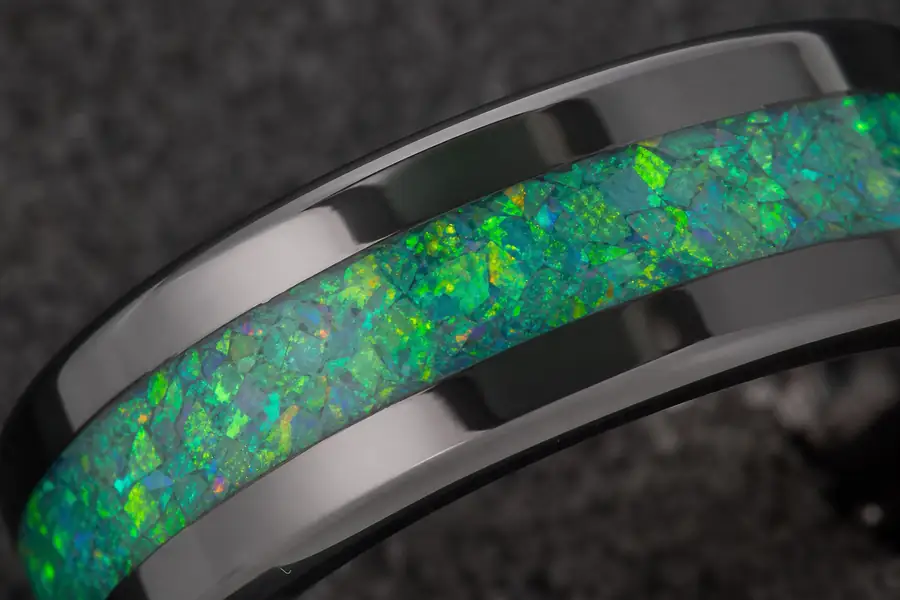
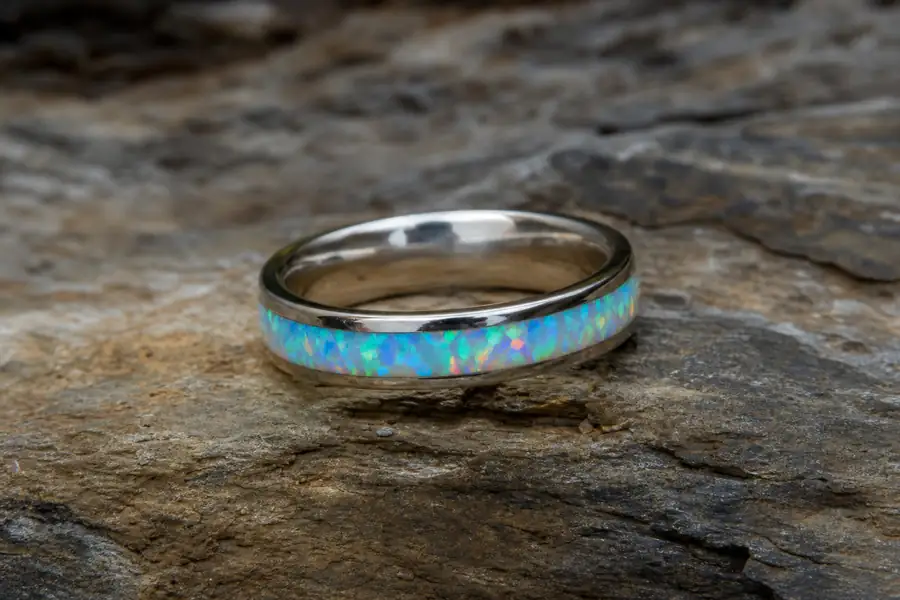
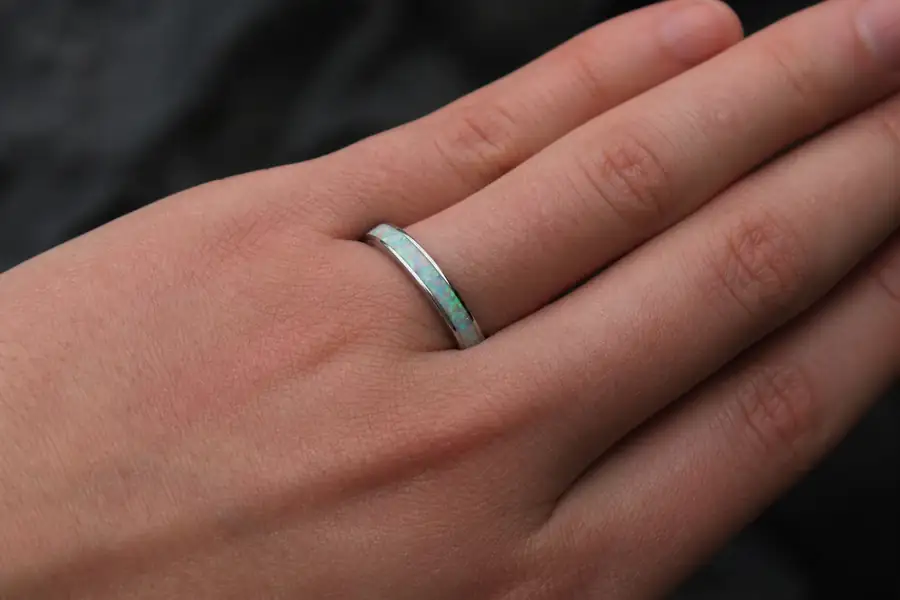
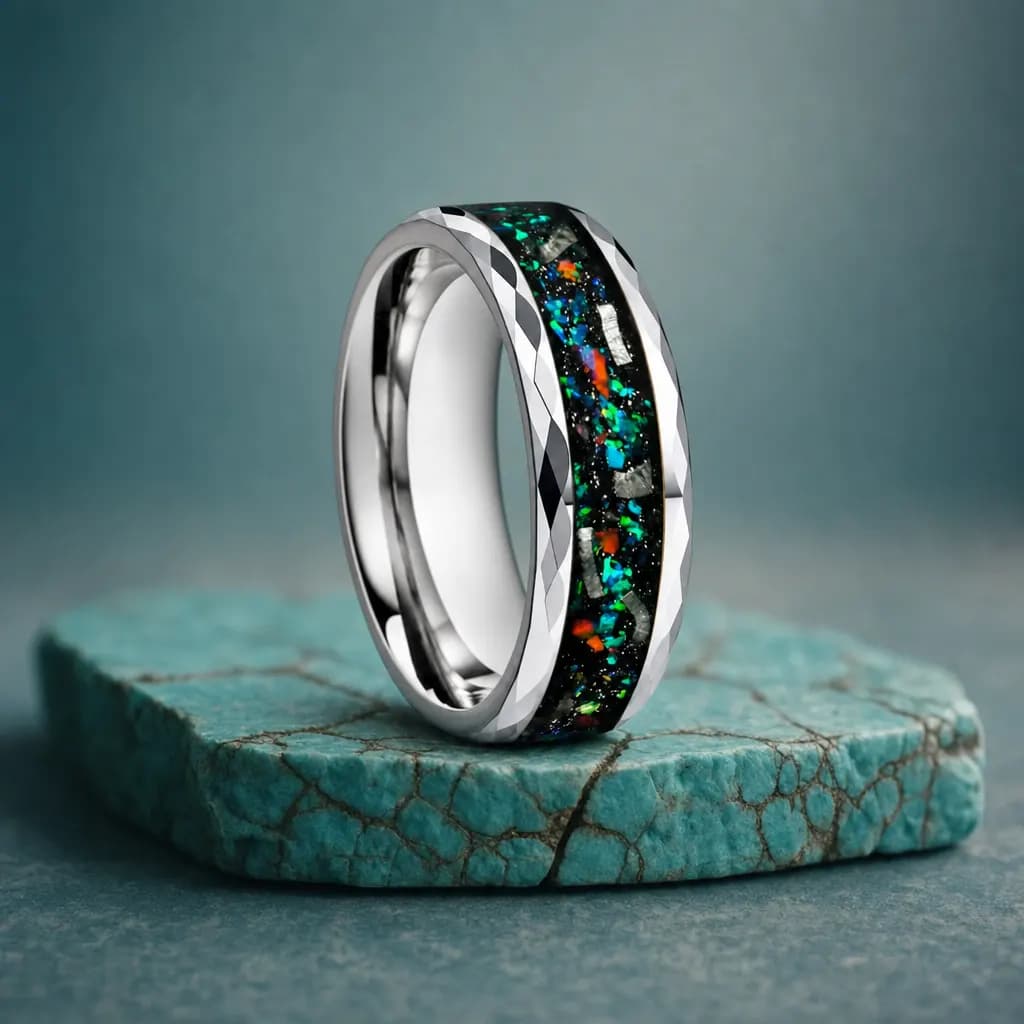
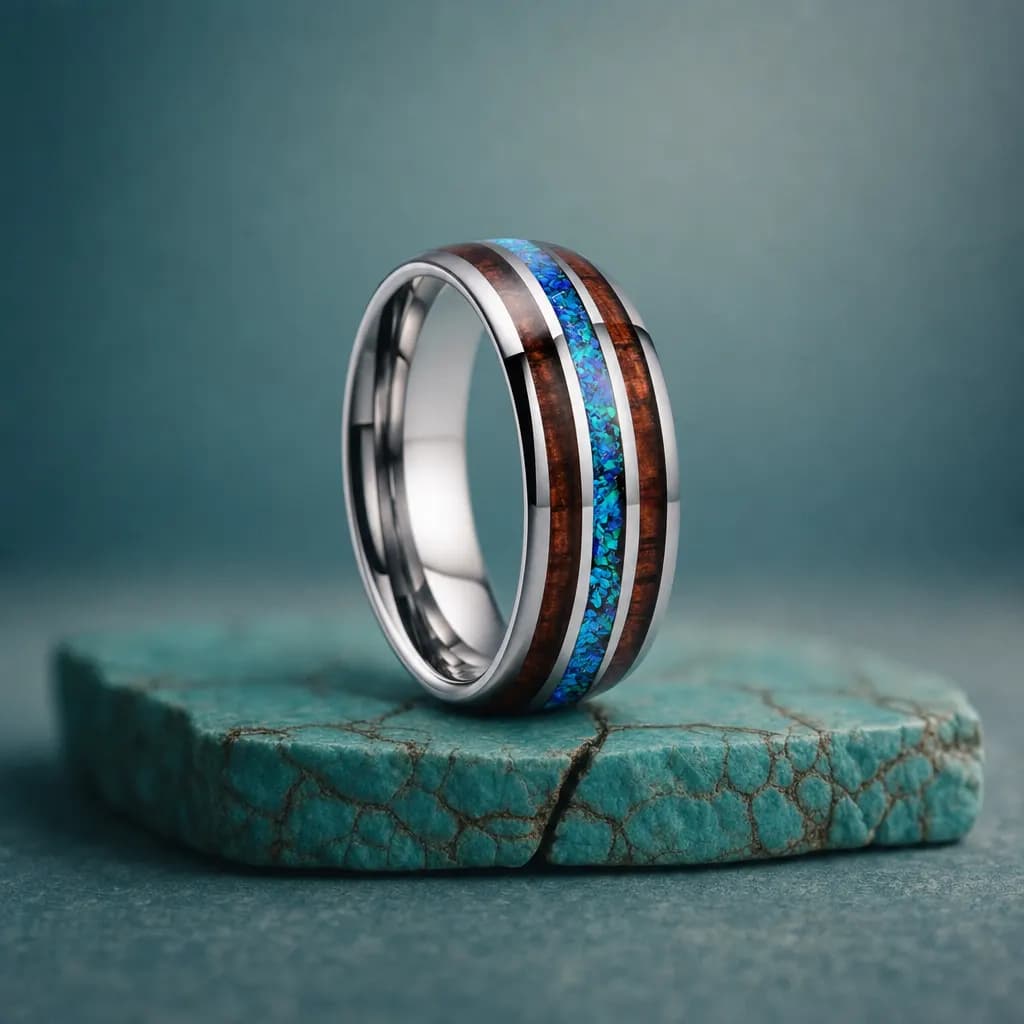
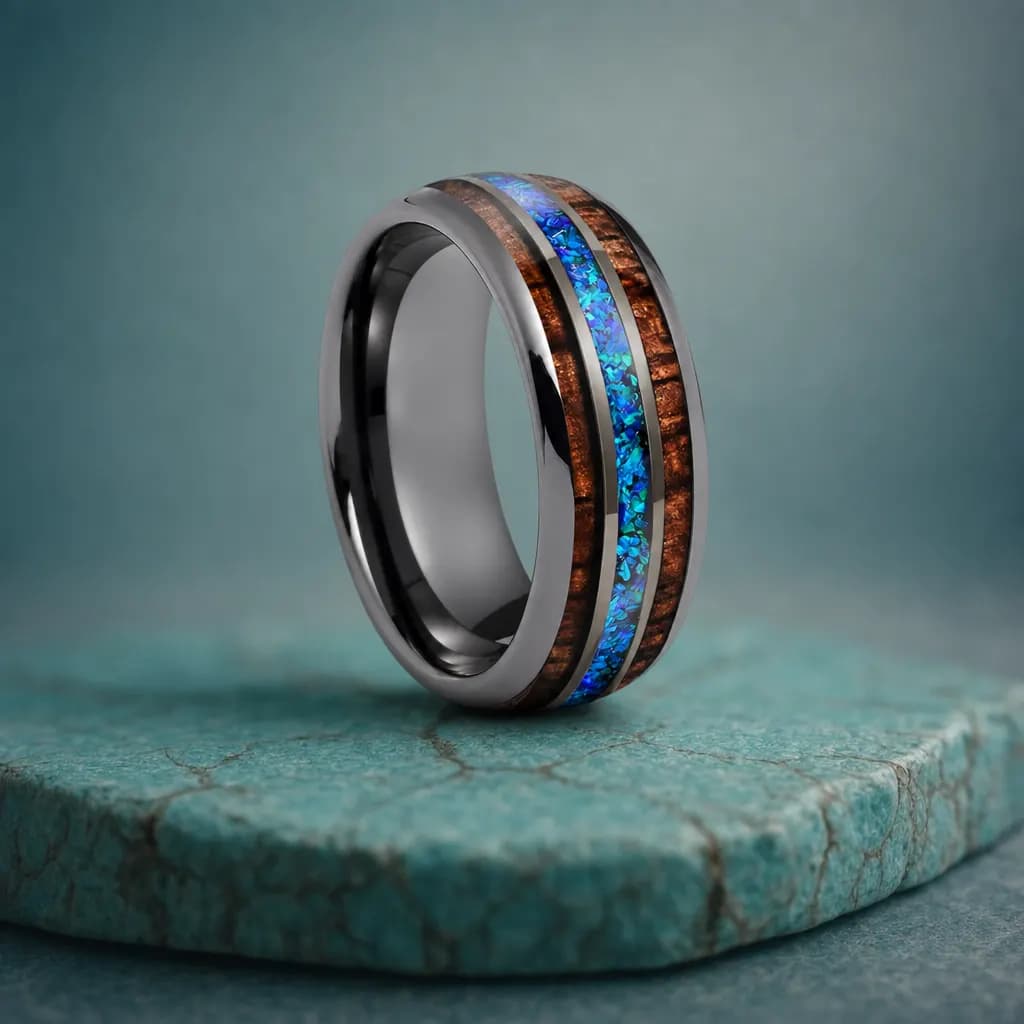
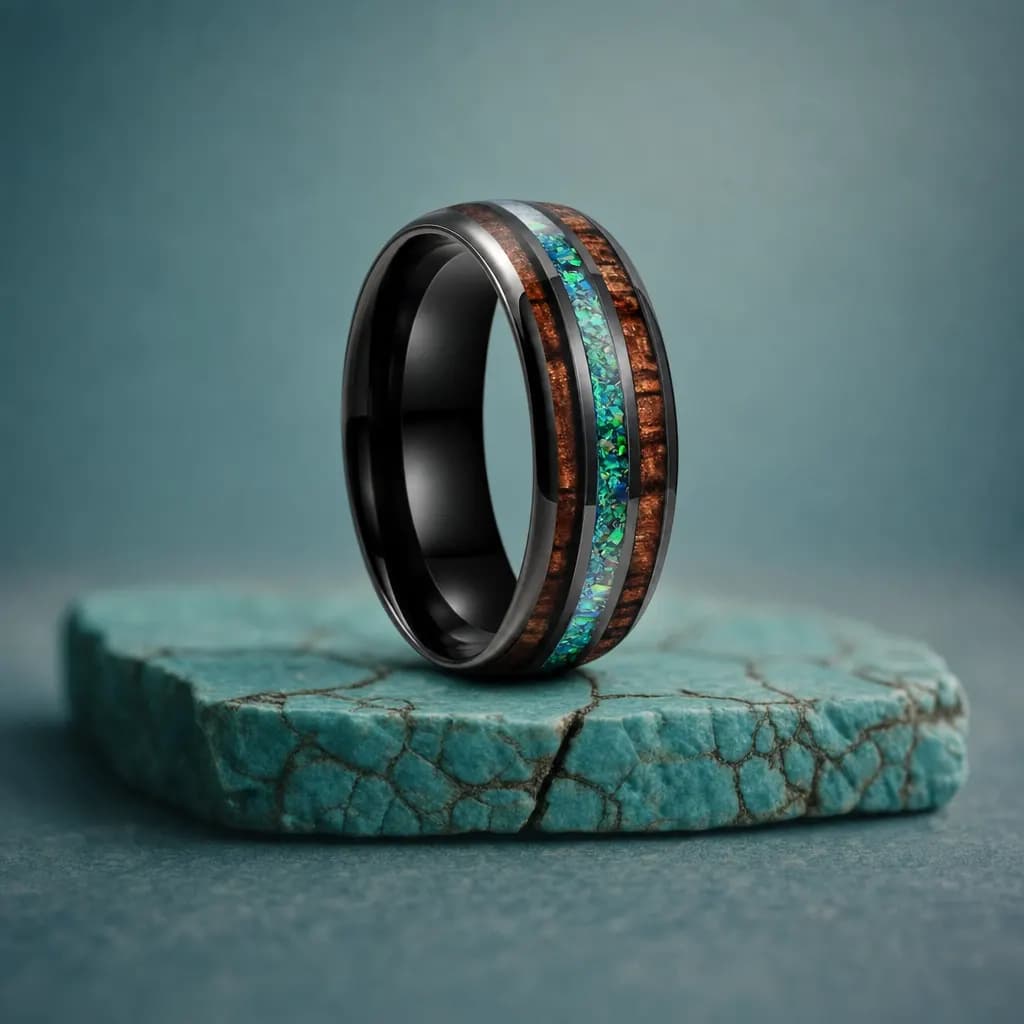
A male opal ring is built by machining a groove into the band and fitting a thin strip of opal into that channel, flush with or slightly below the metal surface. The stone is cut narrow, usually a few millimeters wide, and runs as a straight line or off-center inlay rather than covering the whole face of the ring. That narrowness matters: a wide dome of opal reads as a gemstone ring, while a slim channel reads as a material detail, closer to a stripe of color than a jewel.
The Aurora is a working example of the approach: a thin ribbon of opal set against a matte dark band, with the stone doing one job (color) while the metal does the other (weight, scale, contrast). The opal never stands proud of the band's surface, so there's nothing for a doorframe or a wrench to catch.
What Play-of-Colour Means in an Opal Inlay
Play-of-colour is the shifting flash of spectral color you see across an opal's surface as it moves under light, caused by microscopic silica spheres inside the stone bending light at different angles. It's a physical structure, not a surface coating or a dye, which is why the color shifts rather than staying fixed the way a painted stripe would. Against pale gold or silver, that flash reads soft and iridescent. Against black or gunmetal tungsten, the same flash reads sharp, almost electric, because the dark backdrop absorbs the surrounding light instead of competing with the stone for it.
That contrast is the entire design logic behind a male opal ring. The metal isn't just a frame, it's doing the work of making a naturally soft-colored stone look deliberate and graphic instead of pretty.
Is a Male Opal Ring Durable Enough to Wear Daily?
A male opal ring is durable enough for daily wear if the opal sits recessed in a channel setting, but the stone itself is genuinely softer than the metal around it and will scratch or chip before the band ever will. Opal rates about 5.5 to 6.5 on the Mohs hardness scale. Tungsten carbide rates around 9, among the hardest metals used in jewelry. That gap is exactly why the opal is never left proud of the surface: recessing the stone lets the metal take the direct hits from doorframes, tools, and gym equipment while the opal rides below the impact line.
What it won't tolerate well is sustained pressure or a sharp direct strike, the kind of thing that would also chip a wood inlay or a shell inlay. Heavy manual trades and opal inlay bands aren't a natural pairing for that reason. Office work, driving, most daily wear: no issue.
Choosing Metal and Style for a Male Opal Ring
The metal backdrop determines whether a male opal ring looks industrial or delicate, and darker, matte finishes consistently push the design toward masculine rather than decorative. Black tungsten gives the highest contrast and the most graphic flash. Gunmetal grey softens it slightly for everyday wear. Polished finishes push the ring toward dressier occasions, since gloss competes with the opal's own shine.
Metal Finish
Contrast With Opal
Best For
Black tungsten, matte
High
Bold, industrial daily wear
Gunmetal grey, brushed
Medium
Subtle everyday styling
Black ceramic, polished
High, glossy
Dress occasions
If you want the inlay set into a band with visible texture rather than a flat surface, the Forge Edge collection leans into hammered and faceted metalwork that gives the opal channel a rougher, more deliberate backdrop. For a cleaner, uniformly dark base, the black wedding bands collection is the more direct route to that high-contrast look.
Sizing, Resizing, and Caring for an Opal Inlay
Get your size right before you order, because a male opal ring cannot be resized once the channel is cut and the opal is set. The stone runs through the band at a fixed width, so cutting the metal to enlarge or shrink it would destroy the inlay. Our ring sizing guide walks through measuring at home before you order, which matters more here than with a plain metal band. We explain the mechanics of the trade-off in full in why tungsten rings cannot be resized, and it's worth reading before you buy rather than after.
Day to day, care for an opal channel the same way you'd care for any inlaid material: avoid harsh chemicals, avoid impact against hard edges, and clean with a soft cloth rather than an abrasive one. The same logic that governs looking after a wood inlay ring applies to opal, since both are softer materials set into a much harder metal frame.
FAQs
Does an opal ring look feminine on a man?
Not when the opal is set as a narrow channel against dark metal rather than mounted as a raised, dome-cut stone. The setting style, not the presence of opal itself, determines whether a ring reads masculine or decorative.
Can a male opal ring be worn every day?
Yes, as long as the opal sits recessed in a channel setting rather than raised above the band's surface. Recessed placement protects the stone's edges from daily knocks, though heavy manual work still carries more risk to the opal than to the metal.
Will opal fade or lose its color over time?
Opal's play-of-colour comes from its internal silica structure, not a surface treatment, so it does not fade with normal wear or light exposure. Cracking or chipping from impact is the real risk, not color loss.
Can an opal inlay ring be resized later?
No. Once the channel is cut and the opal is set, resizing would require cutting through the stone itself, so getting an accurate measurement before ordering is essential.
What is the safest way to clean an opal inlay band?
Wipe it with a soft, damp cloth and avoid ultrasonic cleaners, harsh chemicals, and abrasive polishing compounds, all of which can dull or crack the opal even if the surrounding metal is unaffected.
About this guide
Written by the Maison Menashe team against the rings we actually stock. Specifications quoted here, including widths, thicknesses and materials, are taken from our own catalogue rather than from a supplier sheet.
We sell these rings, which is a bias worth knowing about when you read us. We try to earn the benefit of the doubt by stating the limitations plainly, including the ones that cost us sales: tungsten carbide cannot be resized, and a black finish is a coating that wears at the contact points over years.