Wedding Band Inlay Comparison: Wood, Meteorite, Antler or Opal
MBy the Maison Menashe team··6 min readBuying Guides
An inlay is the strip of material set into the center or edge of a tungsten carbide band, sitting alongside the metal rather than replacing it. Wood, meteorite, antler and opal are the four inlays worth taking seriously on a men's wedding band, and each one changes how the ring looks, how it survives a workday, and how it ages over ten or twenty years. This wedding band inlay comparison covers look, durability, care and aging for each material, then narrows the choice by how you actually live: hands-on work, formal settings, or wanting something no one else is wearing.
Wood inlay reads the warmest and most casual, but needs occasional oil and stays away from harsh solvents.
Meteorite inlay carries a natural crystal pattern unique to each ring, sealed under resin so it does not rust.
Antler inlay is porous like wood but tougher day to day, with a rugged, outdoor look.
Opal inlay is the most fragile of the four and suits low-impact wear more than a job site.
All four sit inside a tungsten carbide band, which cannot be resized once it is cut.
Wood, Meteorite, Antler, or Opal: Comparing the Look
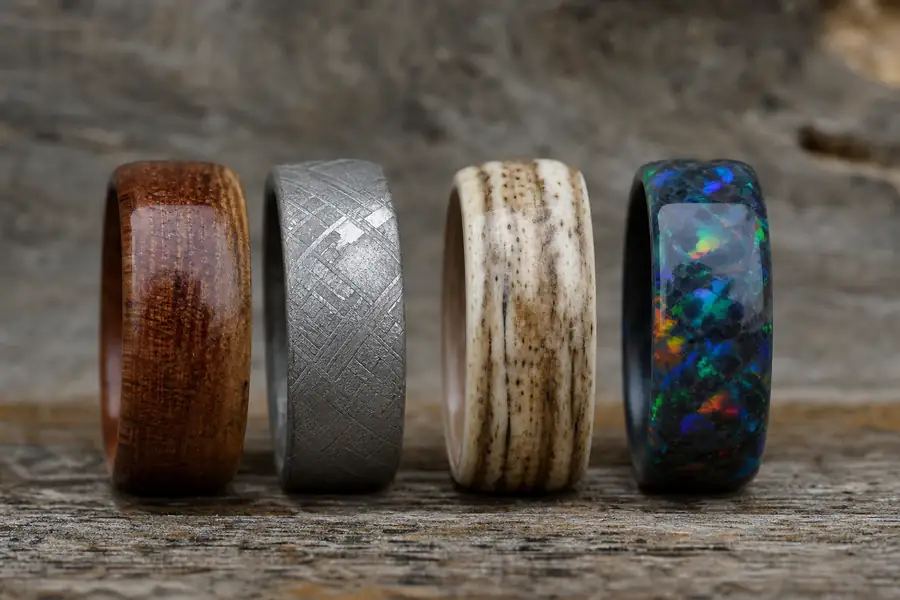
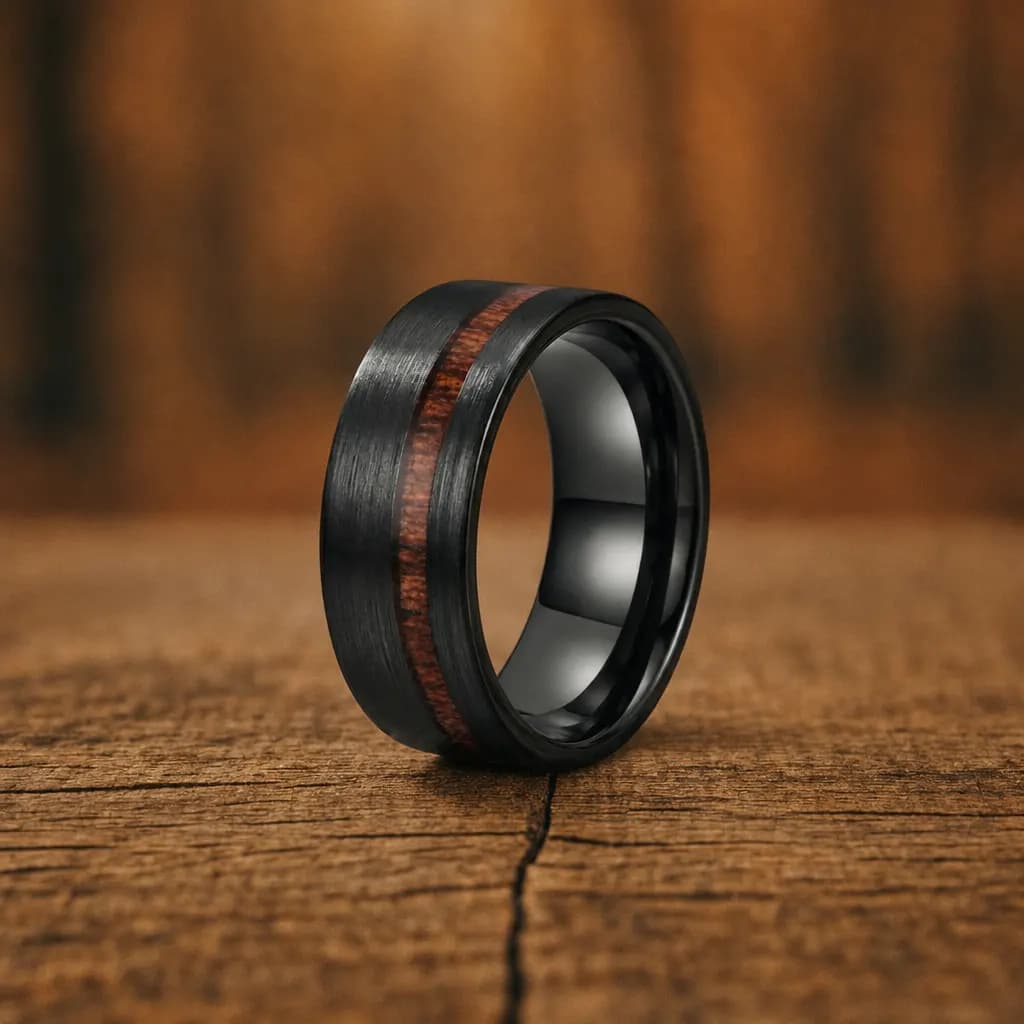
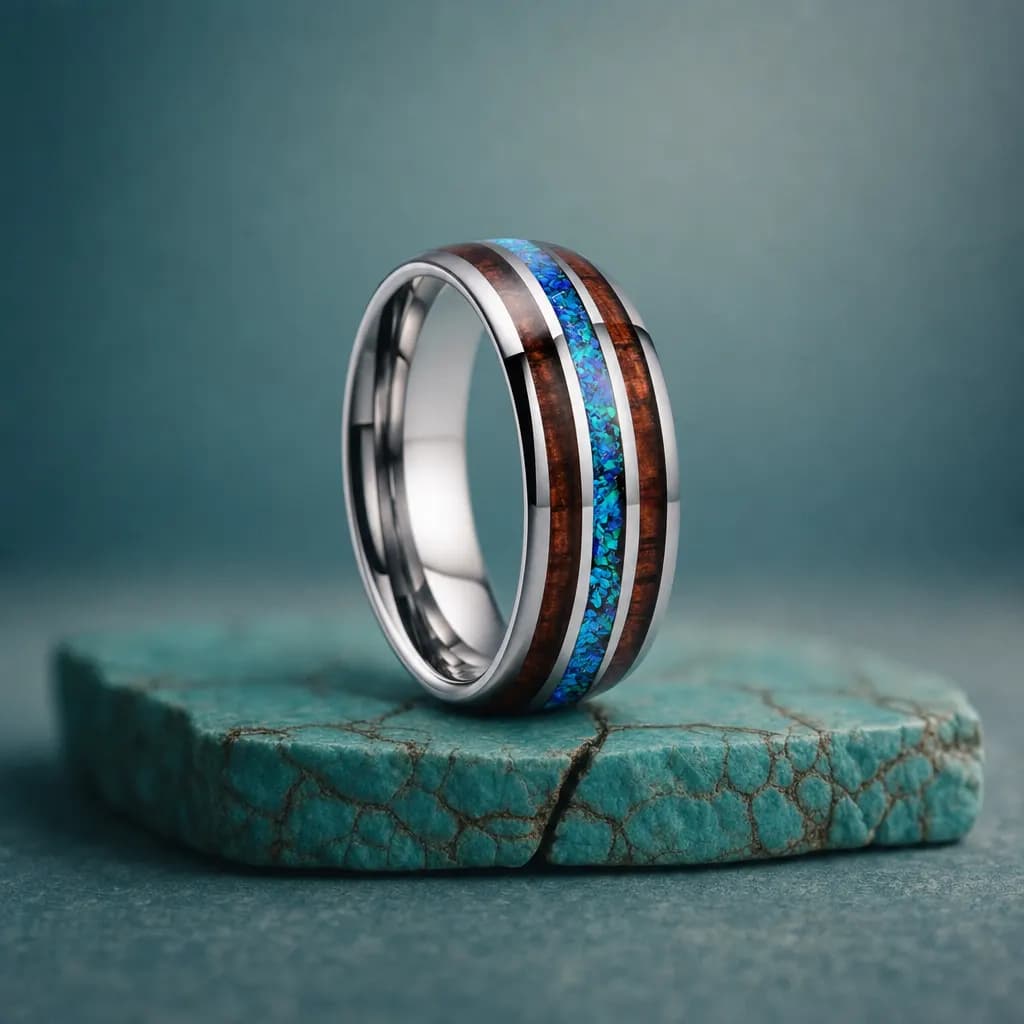
Wood inlay brings grain and warmth to a tungsten band, and no two strips pattern quite the same, so it reads casual even next to a suit. Full ranges of these styles sit in the wooden rings collection, spanning koa, walnut and rosewood tones.
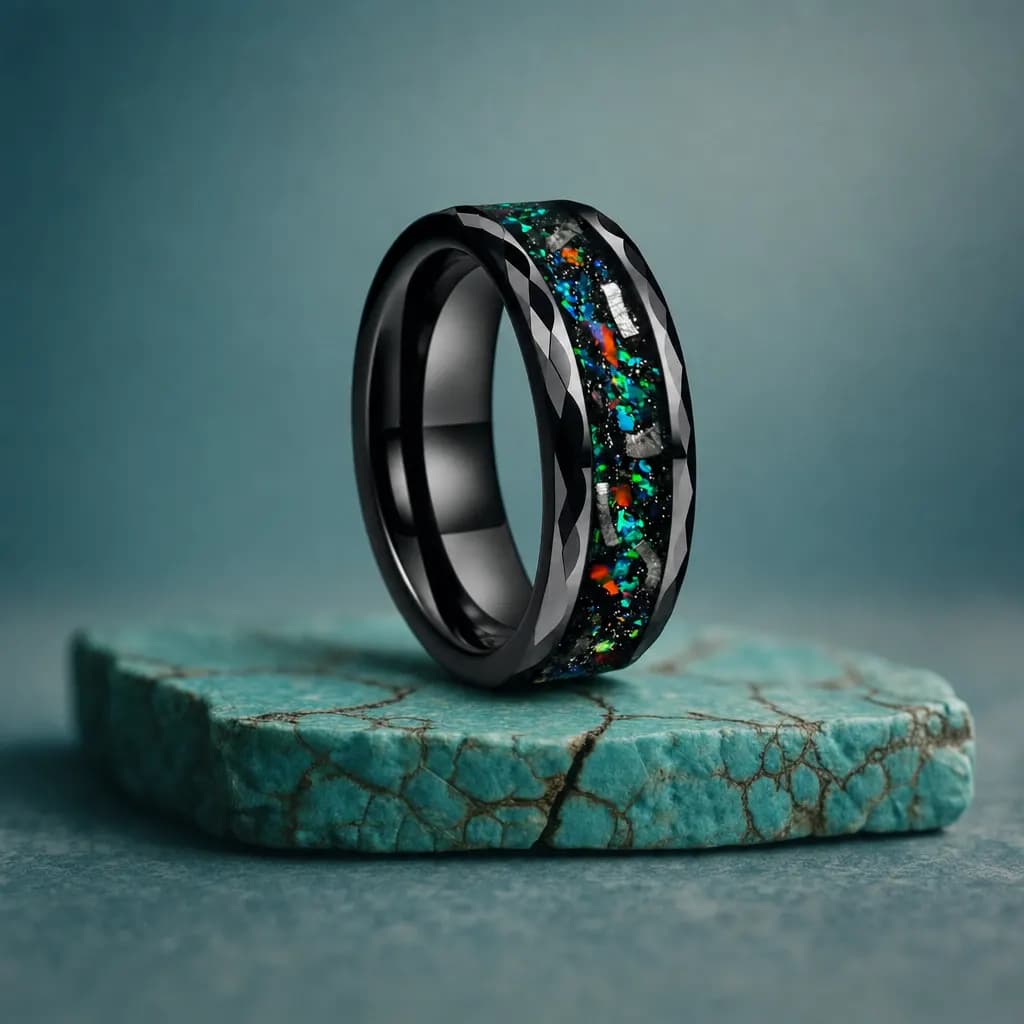
Meteorite inlay shows a crosshatch pattern called Widmanstätten structure, nickel-iron crystals that formed over millions of years in the parent asteroid and only become visible once the surface is etched with acid. That crystalline, metallic look pairs naturally with the harder-edged designs you will find in the forge-edge collection, and dedicated pieces live in the meteorite wedding bands collection.
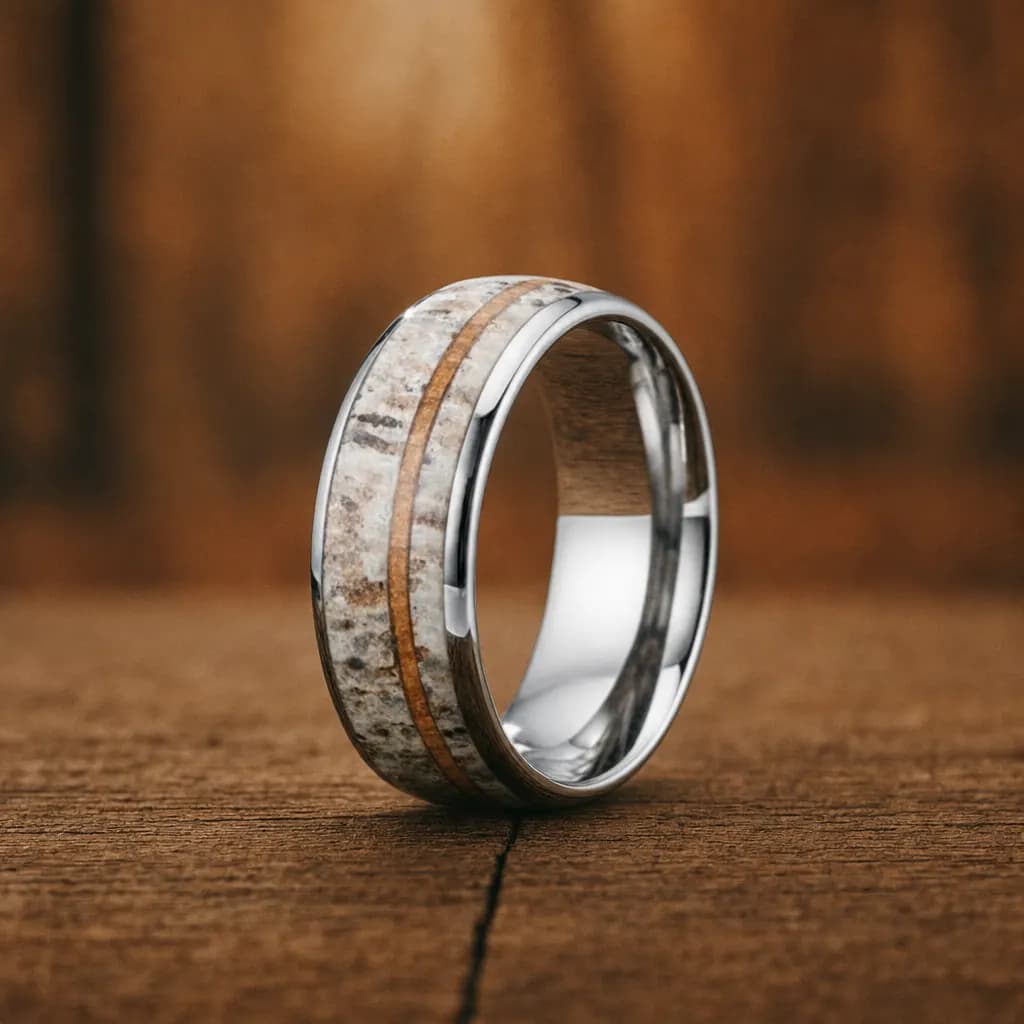
Antler inlay looks close to bone, ivory to tan with visible density lines running through it, and it carries an outdoor, natural-material identity closer to hunting and fishing than to jewelry. Wood, antler and other organic materials are grouped together in the natures-elegance collection.
Opal inlay is the only one of the four with color movement: flashes of blue, green or orange that shift as your hand turns under light. It is the most obviously decorative option here, closer to a gemstone than a natural material.
Durability in a Wedding Band Inlay Comparison: Which Inlay Holds Up Best
Tungsten carbide underneath every one of these rings is close to scratchproof, so the inlay, not the metal, decides how the ring survives daily wear. Of the four, meteorite and antler tolerate the most abuse; opal tolerates the least.
Material
Daily wear risk
Best suited for
Wood
Dents, swells with moisture, damaged by solvents
Desk jobs, occasional site work
Meteorite
Very hard once sealed, but the etched pattern can dull over decades
Daily wear, including manual trades
Antler
Chips at the edge under a hard impact, otherwise tough
Outdoor work, moderate hands-on trades
Opal
Cracks under a sharp knock, scratches around 6 on the Mohs hardness scale
Office work, low-impact daily wear
Care and Aging: How Each Inlay Changes Over Time
Wood inlay needs the most upkeep of the four: a drop of mineral oil every few months keeps it from drying and cracking, and following a proper wood inlay ring care routine matters more here than for any other material in this comparison.
Meteorite inlay ages by mostly staying still. The resin channel sealing it keeps the iron content from rusting on contact with skin or water, and the pattern underneath does not fade with wear.
Antler inlay ages the way wood does, darkening slightly from the natural oils in your skin, though it tolerates water a bit better than wood. Left wet for long stretches against certain metals, it can still stain.
Opal inlay does not age in the sense of wearing in. The stone is fixed the day it is set, so it either survives intact through years of wear or it chips, with nothing in between.
Which Inlay Fits Your Situation
For hands-on work, meteorite or antler beats wood or opal. A sealed meteorite channel shrugs off knocks that would dent a soft wood edge, and antler holds up almost as well while looking less industrial.
For formal settings where the ring rarely meets a tool or a job site, wood or opal reads more finished. Wood's grain looks intentional next to a suit, and opal's color play works precisely because the ring is not getting knocked around all day.
For wanting something no one else has, meteorite's pattern is genuinely singular. No two pieces of nickel-iron cool into the exact same crystal structure, so the pattern on your ring exists nowhere else. Opal runs a close second, since no two stones show the same color movement.
Whichever inlay you choose, it sits inside a tungsten carbide band, and tungsten cannot be resized once it is cut. That is worth stating plainly rather than glossing over. Measure carefully before ordering, or get properly sized using the guidance on the ring sizing page, since getting it right the first time beats waiting on a replacement even when that replacement is free.
FAQs
Can a wood, meteorite, antler or opal inlay ring be resized?
No. The tungsten carbide base underneath all four inlays cannot be cut or stretched without shattering, so none of these rings can be resized after the fact. Getting an accurate measurement before ordering is the only real safeguard.
Which inlay wears the longest without visible change?
Meteorite, once properly sealed under resin, tends to show the least change over years of daily wear because the pattern is etched into hard metal rather than sitting on a soft surface. Antler is a close second for everyday durability.
Does a meteorite inlay rust?
The meteorite itself contains iron and can rust if left exposed, which is why reputable meteorite inlays are sealed under a layer of clear resin. As long as that seal stays intact, the pattern underneath will not oxidize or fade.
Can I wear an opal inlay ring every day?
You can, but opal is the most fragile of the four inlays and can crack under a hard impact that the other materials would shrug off. It suits office work and everyday wear better than construction, mechanics, or other high-impact trades.
Is antler inlay made from real animal antler?
Yes, antler inlays use genuine shed antler, which is porous and takes on a slight color shift over time from oils in your skin. It is not synthetic, and each piece carries its own natural grain pattern.
About this guide
Written by the Maison Menashe team against the rings we actually stock. Specifications quoted here, including widths, thicknesses and materials, are taken from our own catalogue rather than from a supplier sheet.
We sell these rings, which is a bias worth knowing about when you read us. We try to earn the benefit of the doubt by stating the limitations plainly, including the ones that cost us sales: tungsten carbide cannot be resized, and a black finish is a coating that wears at the contact points over years.