MBy the Maison Menashe team··7 min readStyle & Design
Width is the one spec that changes a ring more than metal or finish. Two men can order the same tungsten carbide band and end up with rings that look nothing alike on their hands, purely because one picked 6mm and the other picked 8mm. Before you choose a finish or a stone setting, decide how much ring you actually want to see on your finger.
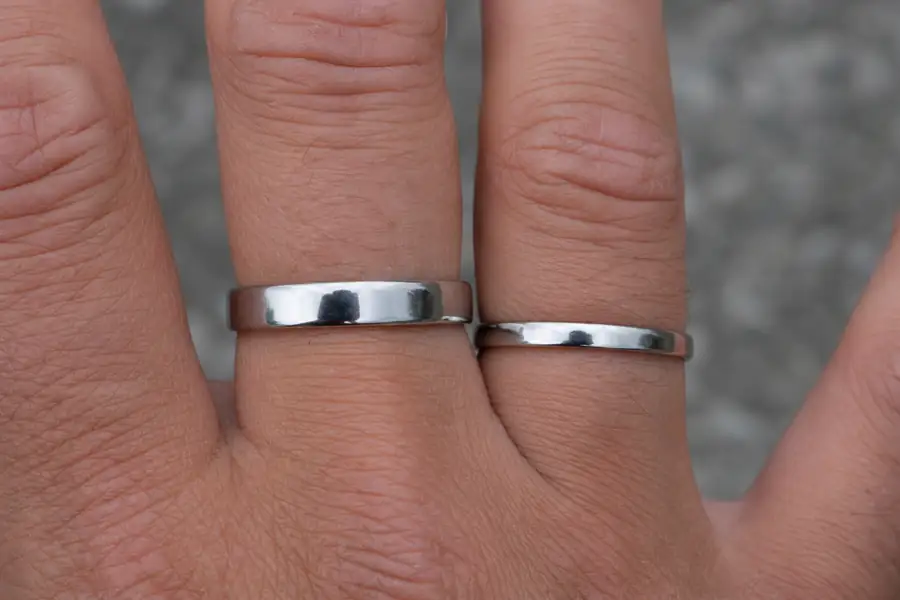
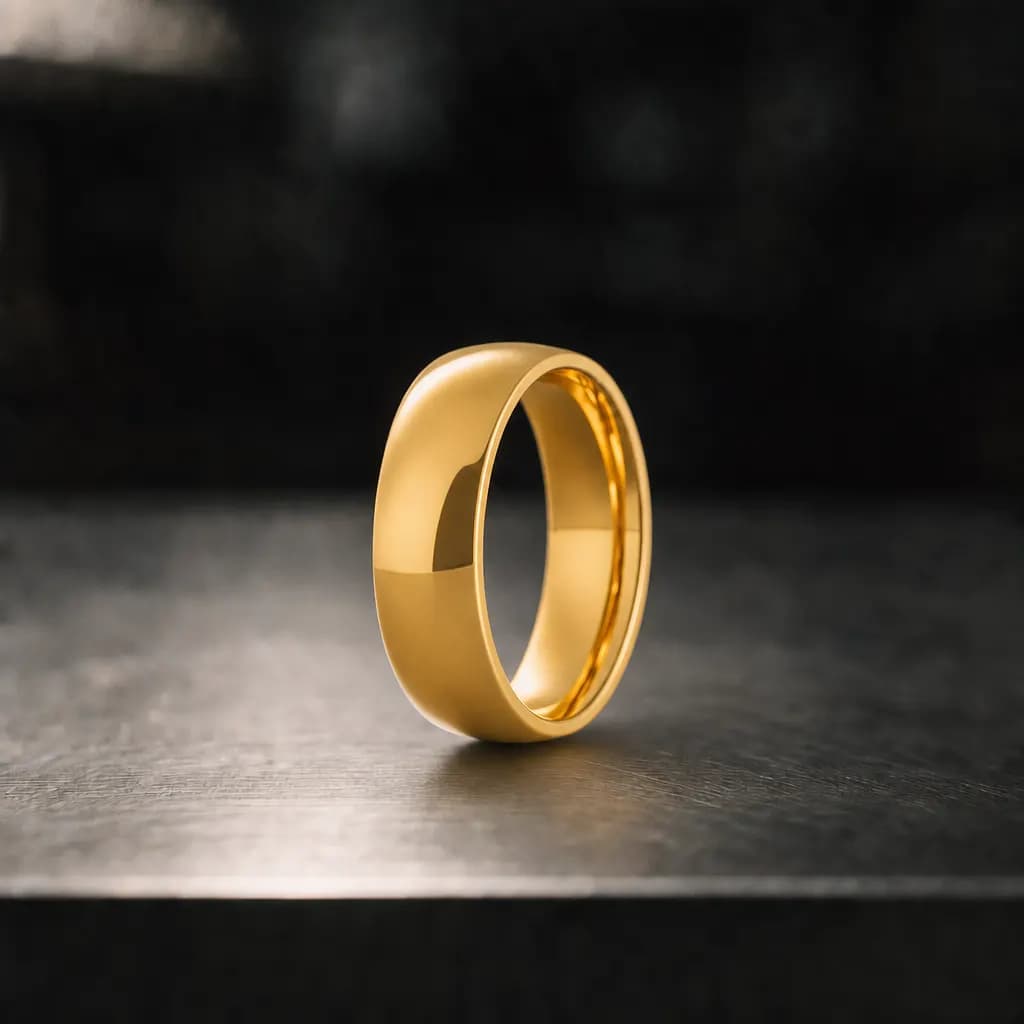
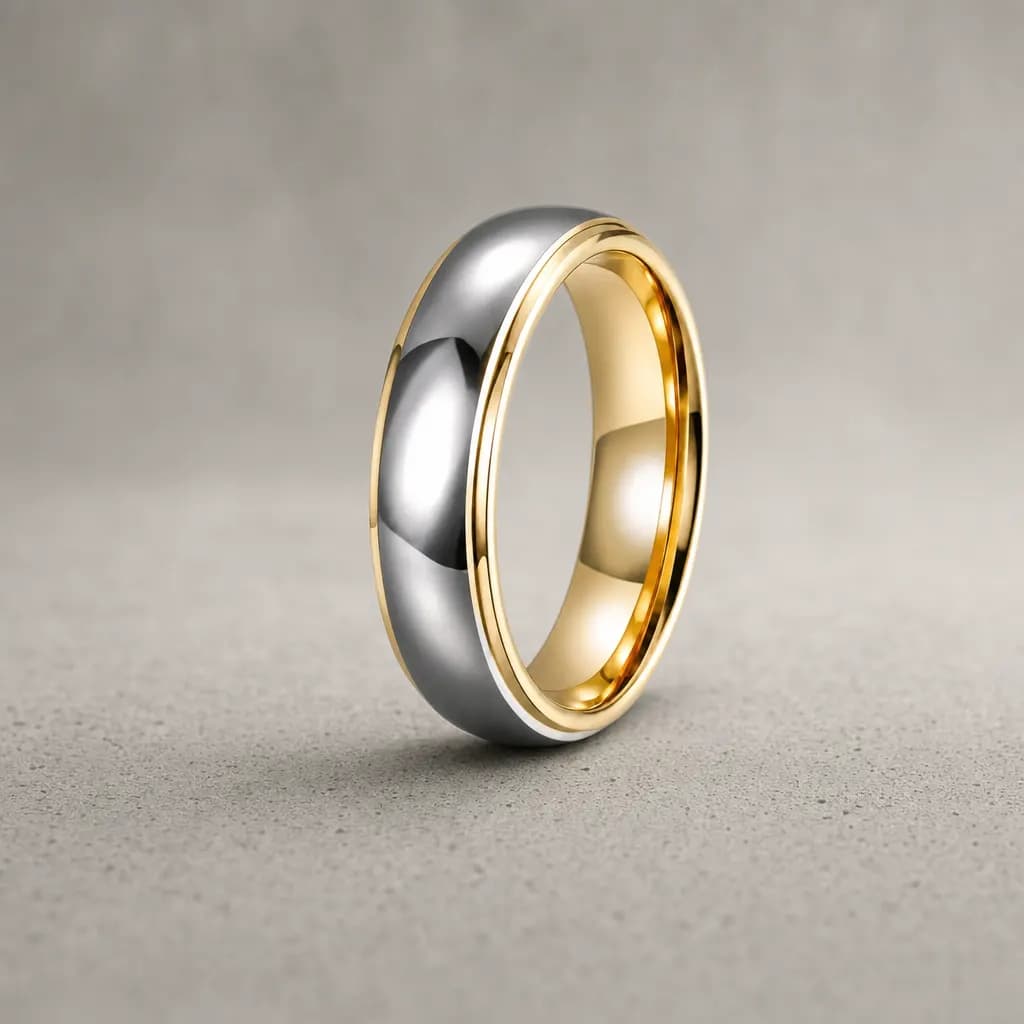
A mens wedding band 8mm reads as a deliberate, substantial piece of jewelry. A 6mm band reads as a quieter accent that sits close to the finger. Neither is more correct. The right one depends on your hand, not a rule.
8mm suits larger hands, longer fingers, and men who want a ring with visible presence.
6mm suits average to smaller hands and reads as understated, closer to a classic band.
Wider bands feel heavier on the hand even at the same metal, because more material sits against the skin.
Knuckle size, not just finger width, determines whether a wide band looks balanced or bulky.
Width has nothing to do with durability. Tungsten carbide resists scratching at 6mm and 8mm alike.
Mens Wedding Band 8mm: How It Reads on a Hand
An 8mm band covers roughly the width of two stacked stripes of masking tape, and on the hand that translates to a ring that announces itself. It works best on hands with wider palms, thicker fingers, or knuckles that are noticeably larger than the finger itself. On a hand like that, an 8mm ring fills the visual gap between knuckle and base of the finger instead of looking lost in it.
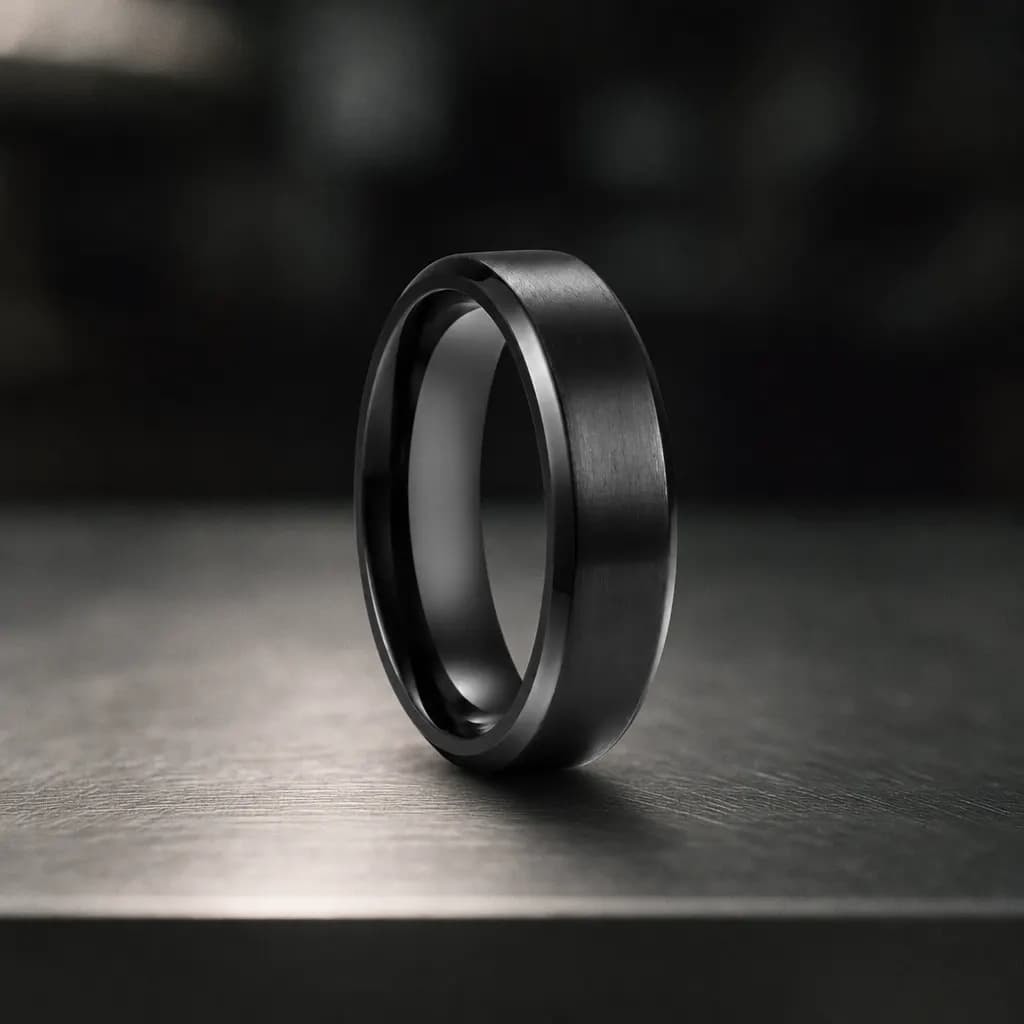
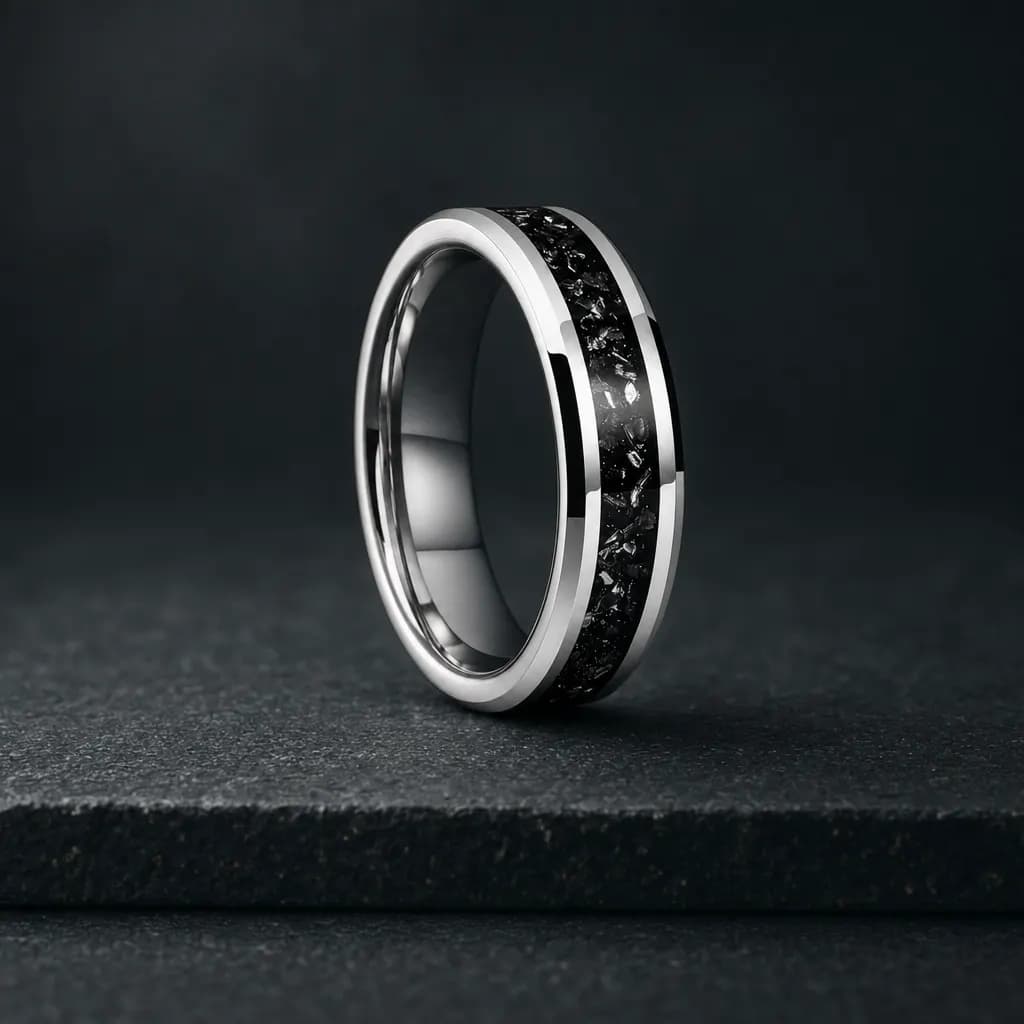
Men who gravitate toward 8mm tend to want a ring that reads as jewelry, not just a metal loop. It photographs well, it has real heft, and it holds its own next to a watch or cufflinks. Browsing the 8mm wedding bands collection is the fastest way to see how the width sits across different finishes, from brushed matte to polished and beveled edges.
The tradeoff is proportion. On a narrow finger, 8mm can look like it belongs to someone else's hand. That's the one case where wider is not simply bolder, it is wrong for the frame it sits on.
When a 6mm Band Reads Quieter
A 6mm band sits close to the classic wedding ring width and disappears into the hand rather than announcing itself. It suits men with slimmer fingers, smaller knuckles, or anyone who wants the ring to register as a detail rather than a statement. Office environments, manual trades where you already wear gloves over the ring, and minimalist wardrobes all tend to favor 6mm.
It is also the safer default if you are buying for someone else and unsure of their taste. A 6mm band from the 6mm wedding bands collection reads as traditional enough that it rarely looks out of place, even next to more formal jewelry.
Where 6mm falls short is on a hand built for more ring. On a man with a wide palm and thick fingers, a 6mm band can look thin, almost like it was sized for someone smaller.
How Finger Length and Knuckle Size Change the Look
Finger length changes how much room a wide band has to work with. Short fingers have less linear space between the knuckle and the base, so an 8mm band can cover a larger percentage of visible finger and start to crowd the hand. Long fingers have more room, which is why 8mm often looks most balanced on hands that are already on the larger side.
Knuckle size matters just as much, and it is the detail most men skip. If your knuckle is noticeably wider than the base of your finger, a narrow 6mm band can look pinched once it slides past the knuckle and settles at the base, because the eye still remembers the wider point it just passed. A wider band smooths that transition and reads as proportional the whole way down.
The only way to know for certain is to try both widths on your own hand, or at minimum measure carefully using a ring sizing guide and compare the width options side by side before ordering. Because tungsten carbide cannot be resized once it is made, getting the width and the size right at the same time matters more here than with a soft metal band. If sizing at home, walking through the steps for measuring your ring size at home before you choose a width avoids most of the guesswork.
Why Width Changes How Heavy a Ring Feels
An 8mm tungsten carbide band weighs noticeably more than the same ring at 6mm, simply because there is more material in the loop. Tungsten carbide is already dense, roughly 1.7 times heavier than steel by volume, so the jump in width is felt immediately when you first put the ring on.
That extra weight is not a flaw. Many men specifically want a ring with heft, because it feels substantial and doesn't disappear the way a thin gold band can. But if you have never worn a ring before, an 8mm band takes a few days to stop feeling noticeable on the hand. A 6mm band, by contrast, tends to feel close to weightless within the first day.
If weight is a bigger concern than width, know that the two aren't locked together. A narrower profile in a comfort fit design, with the slightly domed interior most bands use, sits lighter than a flat interior at the same width.
Choosing Between 6mm and 8mm for Your Hand
Start with your hand, not your preference. Look at your knuckle relative to your finger, and picture a strip of ring sitting just past it: if the gap looks like it needs filling, lean toward 8mm; if the finger already reads balanced on its own, 6mm will look intentional rather than thin.
Factor
Favors 6mm
Favors 8mm
Hand size
Average to small
Larger palm, thicker fingers
Finger length
Shorter fingers
Longer fingers
Knuckle size
Close to finger width
Noticeably wider than finger
Preferred feel
Light, barely there
Substantial, present
Style
Classic, understated
Bold, deliberate
If you're still unsure after measuring, the best-selling wedding bands lean toward the middle of that range for a reason: 8mm is the most common choice among men buying their first ring, since it reads as a wedding band rather than a fashion ring without tipping into oversized.
FAQs
Is 8mm too big for a wedding band?
No, 8mm is one of the most common widths for men's wedding bands and it is not considered oversized on an average to large hand. It only looks too big on hands with noticeably slim fingers, where a 6mm or 7mm width tends to look more proportional.
What is the most popular ring width for men?
8mm is generally the most requested width for men's tungsten carbide wedding bands, since it reads as substantial without being unusual. 6mm remains popular among men who want a quieter, more traditional look or who have slimmer fingers.
Can I try on both widths before buying?
The safest approach is to measure your finger carefully using a ring sizing guide and compare width options against a printed ring sizer or a ring you already own of a known width. Since tungsten carbide cannot be resized after manufacturing, confirming both width and size before you order matters more than with softer metals.
Does a wider band feel uncomfortable to wear?
Not typically, especially in a comfort fit design with a slightly domed interior that reduces contact with the skin. Most men adjust to the extra width and weight of an 8mm band within a few days of regular wear.
Will a wide band get in the way at work?
It depends on the job. Men who work with their hands often prefer 6mm for a lower profile, while those in less hands-on roles rarely notice a difference between 6mm and 8mm during the workday.
About this guide
Written by the Maison Menashe team against the rings we actually stock. Specifications quoted here, including widths, thicknesses and materials, are taken from our own catalogue rather than from a supplier sheet.
We sell these rings, which is a bias worth knowing about when you read us. We try to earn the benefit of the doubt by stating the limitations plainly, including the ones that cost us sales: tungsten carbide cannot be resized, and a black finish is a coating that wears at the contact points over years.